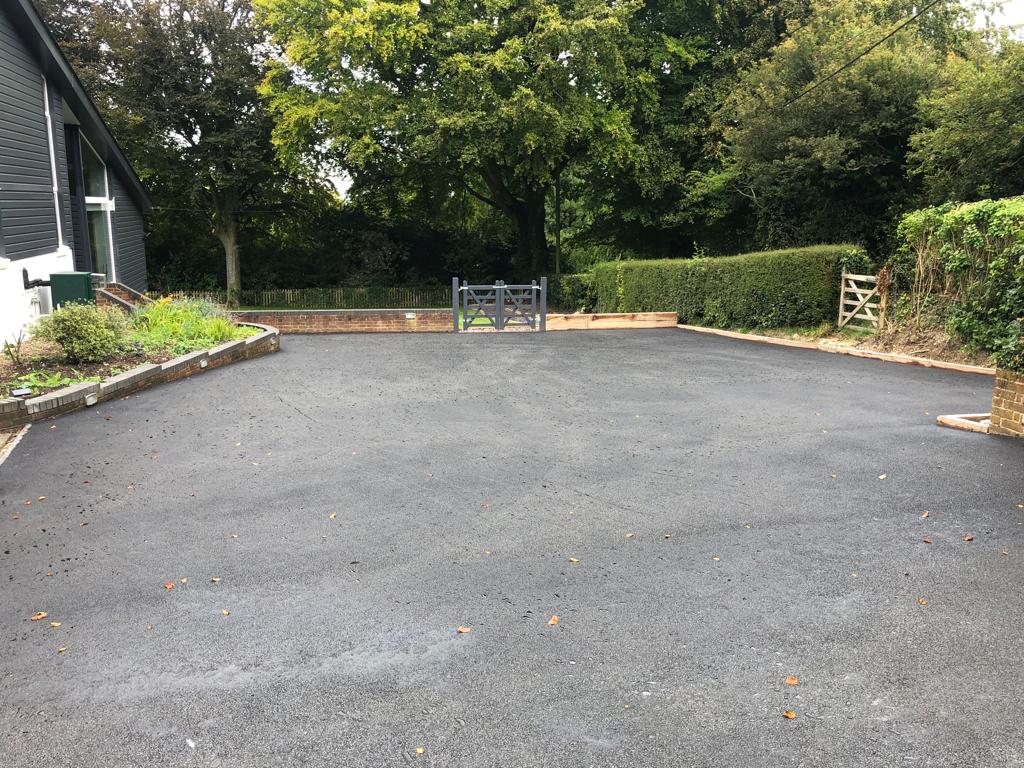
Finding a pothole in an asphalt driveway, car park, access road or hardstand does not automatically mean the entire surface needs to be resurfaced. A single pothole can sometimes be caused by a localised weakness that can be repaired effectively. However, when potholes become frequent, return after previous repairs or appear alongside widespread cracking and surface deterioration, they can indicate that the pavement needs more comprehensive attention.
For property owners and businesses in Warwick, QLD, the important question is not simply how many potholes are visible. The overall condition of the asphalt, the stability of the underlying base and the reason the potholes are forming all need to be considered before deciding whether repairs or resurfacing are appropriate.
Why Do Potholes Develop in Asphalt?
Potholes are usually the result of a deterioration process rather than a sudden isolated failure.
A typical pothole can begin when a crack or weakened section allows water to penetrate beneath the asphalt. Moisture can affect the supporting pavement layers, reducing their ability to carry traffic effectively.
As vehicles continue travelling across the weakened section, the asphalt flexes and breaks apart. Loose material is gradually displaced until an open pothole develops.
Common contributing factors include:
- Water entering through cracks
- Ageing and weathered asphalt
- Weakness within the pavement base
- Repeated vehicle loading
- Poor surface drainage
- Delayed maintenance
Understanding the cause is essential because filling the visible hole without addressing the underlying problem may only provide a temporary improvement.
Does One Pothole Mean You Need Resurfacing?
Not necessarily.
If there is only one pothole and the surrounding asphalt remains stable, smooth and largely free from deterioration, a localised repair may be sufficient.
A professional repair can remove weakened material, prepare the damaged section and restore the pavement without disturbing asphalt that remains in good condition.
This is why early attention is worthwhile. Localised deterioration is generally easier to contain before it begins affecting surrounding areas.
When Multiple Potholes Become a Warning Sign
The situation changes when potholes are developing across several areas of the pavement.
Multiple potholes may indicate that deterioration is no longer confined to one isolated location. If they are accompanied by cracking, loose aggregate, depressions and general surface wear, the asphalt may be reaching a stage where repeatedly patching individual defects is no longer the most appropriate approach.
At this point, resurfacing should be considered as part of a professional pavement assessment.
Recurring Potholes Deserve Closer Investigation
A pothole that returns in the same area after previous repairs can provide valuable information about what is happening beneath the surface.
Recurring failures may suggest problems such as:
- Unstable base material
- Persistent water infiltration
- Poor drainage
- Movement beneath the pavement
- Traffic loads exceeding the capacity of the affected area
Applying another patch without investigating these conditions may result in the same deterioration occurring again.
Look at the Cracking Around the Potholes
The pattern of cracking surrounding potholes can help indicate the wider condition of an asphalt surface.
A small amount of isolated cracking may remain suitable for targeted repair. However, extensive interconnected cracking across large areas can suggest that the pavement is experiencing more widespread deterioration.
Cracks are particularly important because they allow water to enter the pavement. As the number of cracks increases, there are more opportunities for moisture to affect the supporting layers beneath.
When potholes and widespread cracking occur together, a broader resurfacing assessment becomes increasingly worthwhile.
Surface Wear Is Another Important Indicator
Potholes should not be considered in isolation. The general condition of the surrounding asphalt matters just as much.
An ageing pavement may begin showing:
- A rougher surface texture
- Loose aggregate
- Faded or weathered asphalt
- Numerous small cracks
- Uneven areas
- Previous patches across several sections
If the entire surface is showing significant wear, resurfacing can potentially provide a more consistent solution than continuing to treat individual defects.
What Does Asphalt Resurfacing Involve?
Asphalt resurfacing generally involves preparing an existing pavement and installing a new asphalt layer over a suitable underlying structure.
Before resurfacing, damaged areas need to be repaired and the existing pavement assessed to ensure it can support the new surface.
When conditions are appropriate, resurfacing can:
- Restore a smooth driving surface
- Address widespread surface deterioration
- Improve pavement consistency
- Renew the appearance of the area
- Provide additional protection to the existing pavement
- Extend its useful service life
Resurfacing is therefore particularly useful when the upper asphalt has deteriorated but the underlying pavement remains serviceable.
Resurfacing Cannot Fix Every Pavement Problem
Placing new asphalt over a seriously unstable foundation is unlikely to provide a dependable long-term result.
If potholes are being caused by extensive base failure, significant settlement or major drainage problems, those issues need to be corrected first.
Signs that deterioration may extend deeper include:
- Severe depressions
- Significant rutting
- Widespread pavement movement
- Extensive interconnected cracking
- Repeated failures across repaired areas
Depending on the condition of the pavement, sections may need deeper repair or reconstruction rather than straightforward resurfacing.
Drainage Should Always Be Considered
Water management is particularly important when potholes continue appearing.
After rainfall, check whether water:
- Pools in depressions
- Remains around existing potholes
- Flows into cracked sections
- Collects along pavement edges
- Causes erosion beside the asphalt
If poor drainage is contributing to deterioration, simply repairing the potholes without improving water movement can leave the pavement vulnerable to further damage.
A comprehensive resurfacing project should therefore consider drainage as well as the visible asphalt condition.
When Repairs May Still Be the Better Approach
Resurfacing is not automatically necessary simply because a pavement has developed some damage.
Targeted repairs can remain appropriate when:
- Potholes are limited to one or two areas
- Most of the asphalt remains sound
- Cracking is localised
- The pavement base is stable
- There is no widespread deformation
Preserving sound existing pavement is often preferable to carrying out unnecessary work.
The key is determining whether the deterioration is isolated or becoming widespread.
When Resurfacing Becomes Worth Considering
A professional resurfacing assessment becomes particularly valuable when several warning signs appear together.
These can include:
- Increasing numbers of potholes
- Potholes returning after repairs
- Widespread cracking
- General surface deterioration
- Numerous previous patches
- Rough or uneven driving conditions
- Deterioration affecting large sections of pavement
Rather than repeatedly responding to individual defects, resurfacing may allow the pavement to be restored more comprehensively.
Why a Professional Assessment Matters
Two asphalt surfaces with similar-looking potholes can require completely different treatments.
An experienced surfacing contractor can assess:
- The number and severity of potholes
- Crack patterns
- Surface condition
- Base stability
- Drainage performance
- Previous repair areas
- Traffic demands
- Signs of pavement movement
This allows the condition of the complete pavement to guide the recommendation rather than making a decision based only on what is visible from the surface.
Do Not Wait for Potholes to Become Severe
Potholes tend to become progressively larger as traffic continues passing over them. Their exposed edges can break away, while water has easier access to the underlying pavement.
Early repairs can help contain localised deterioration. If the damage has already become widespread, timely resurfacing can help prevent further decline where the existing pavement remains suitable.
Either way, acting before the surface becomes severely deteriorated gives property owners more options for preserving the pavement.
Conclusion
Potholes are not always a sign that an asphalt surface needs resurfacing. One isolated pothole on an otherwise sound pavement may only require a targeted repair. However, recurring potholes, widespread cracking, numerous previous patches and general surface deterioration can indicate that the asphalt is ready for a more comprehensive resurfacing assessment.
The most important step is identifying why the potholes are forming and whether the underlying pavement remains structurally suitable.
Warwick Asphalt & Bitumen Surfacing provides professional asphalt repairs and resurfacing services throughout Warwick, QLD. If potholes are becoming a recurring problem on your driveway, access road, car park or hardstand, our experienced team can assess the condition of the pavement and recommend an appropriate solution focused on restoring reliable, long-term performance.
Call us on: 07 5230 8325
Click here to find out more about Warwick Asphalt & Bitumen Surfacing
Click here to complete our contact form and see how we can help with your Asphalt and Bitumen Surfacing needs.